July 7, 2026
Outdoor Furniture in Kerala: What Survives Coastal Humidity (A Kochi Guide)
A Kochi guide to outdoor furniture that survives Kerala's two monsoons, salt air and constant humidity. Which materials last, which don't.
If you live in Kochi or anywhere along the Kerala coast, your weather doesn't behave like the rest of India's. Most cities get one monsoon. You get two. The southwest monsoon arrives from June and soaks the state for months, and just when you think the rains are done, the northeast monsoon shows up in October and November for a second round. Add it up and Kochi sees roughly three metres of rain in a typical year, spread across most of the calendar instead of squeezed into a few weeks.
Then there's the part that never really lifts: the humidity. Kerala's coastal air carries moisture and salt together, and even on the drier days between the two monsoons, that humidity rarely drops to anything you'd call comfortable for furniture. If you've bought an outdoor set that looked perfectly fine in the showroom and started rusting, swelling or smelling faintly of mildew within a year on your verandah, this is why. It wasn't built for this climate. It was built for somewhere drier.
This guide is about what actually holds up on a Kochi terrace or a Kerala verandah, material by material, and what the two monsoons and the salt air really do to furniture that isn't ready for them.
What Kerala's climate actually does to outdoor furniture
Before you pick materials, it helps to understand exactly what you're up against. Kerala's coastal climate attacks furniture in a few distinct ways, and almost every failure you've seen traces back to one of them.
Salt corrosion on metal. Being this close to the Arabian Sea means the air itself carries salt, even a few kilometres inland. Salt speeds up corrosion on any metal that isn't built to resist it. Mild steel and untreated iron frames start showing rust spots within months of coastal exposure here, and once rust begins at a scratch or a weld joint, it works outward under the paint.
Mould and mildew in sustained humidity. Kerala doesn't get occasional damp spells, it gets months of it. Cushion foam, natural fabric and untreated wood all absorb that moisture instead of shedding it, and wherever moisture sits for long enough, mould follows. A cushion that never fully dries out between the southwest and northeast monsoons is a cushion that's already growing something you don't want on your verandah.
Swelling in cheap wood. Wood that hasn't been properly seasoned, or doesn't have enough natural oil content to resist water, absorbs moisture and swells, then shrinks again as it dries between rain spells. That repeated expansion and contraction is what splits joints, loosens screws and eventually leaves a chair wobbling even though nothing looks obviously broken.
Fading in intense post-monsoon sun. Once the rains break, Kerala sun comes back strong and direct. Fabrics and finishes that aren't UV-stable fade quickly in that stretch, and the cycle of wet weather followed by hard sun is tougher on materials than steady weather in either direction would be.
Material verdicts for coastal Kerala
Given all that, here's an honest look at what actually works for outdoor furniture in Kerala, and what to steer clear of.
Powder-coated aluminium: the safe frame choice
Aluminium contains no iron, so it simply cannot rust the way steel does. A good powder-coated finish adds a protective layer on top, giving you a frame that shrugs off salt air, sustained humidity and both monsoons without corroding. This is why it's become the default frame material for anyone furnishing a home near the Kerala coast. It's also light enough to move indoors quickly if a sudden downpour catches you off guard, which happens often here.
Grade-A teak: natural resistance with a little upkeep
Genuine Grade-A teak has served Kerala homes for generations, and there's a reason for that. The wood's natural oils and tight grain resist moisture from the inside, which is exactly what you need against two monsoons a year. Left untreated, teak weathers to a soft silver-grey over a season or two, a look plenty of people in Kerala actually prefer. If you want to keep the original honey tone, an occasional oiling keeps it looking that way. The one thing worth checking is that you're buying genuine, properly seasoned teak, since cheaper lookalike woods sold under the same name fail fast in this humidity.
Handwoven synthetic rope and wicker: dries fast, stays stable
Natural cane looks lovely on a verandah, but it wasn't built for Kerala's humidity. It absorbs water, sags and eventually rots. Handwoven synthetic rope and synthetic wicker solve that problem while keeping the same soft, woven look. Made from UV-stable polymer, they don't soak up water the way natural fibre does, and they dry fast once the rain stops, which matters when you're getting rained on twice a year instead of once.
Quick-dry foam and performance fabrics: built to drain, not soak
Cushions are usually where an otherwise good outdoor set falls apart first. Standard foam holds water inside for days, and that trapped moisture is where mildew and odour start. Quick-dry foam has an open cell structure that lets water pass straight through and out, so a cushion caught in a shower drains and dries in hours instead of staying damp for a week. Pair that with UV-resistant performance fabric, which resists fading in the sharp post-monsoon sun and doesn't hold colour-fading moisture the way ordinary upholstery does.
What to avoid
A few materials just aren't worth fighting Kerala's climate for. Mild steel, even powder-coated, corrodes fast once the coating is scratched or chipped, and salt air finds those weak points quickly. Untreated softwoods swell, crack and warp within a monsoon or two. And natural cane left in the open, without any covered protection, rarely survives a full year of Kerala's humidity without sagging or rotting. If a piece uses any of these for an exposed spot, budget for replacing it sooner rather than later.
Covered verandah versus open terrace in Kerala homes
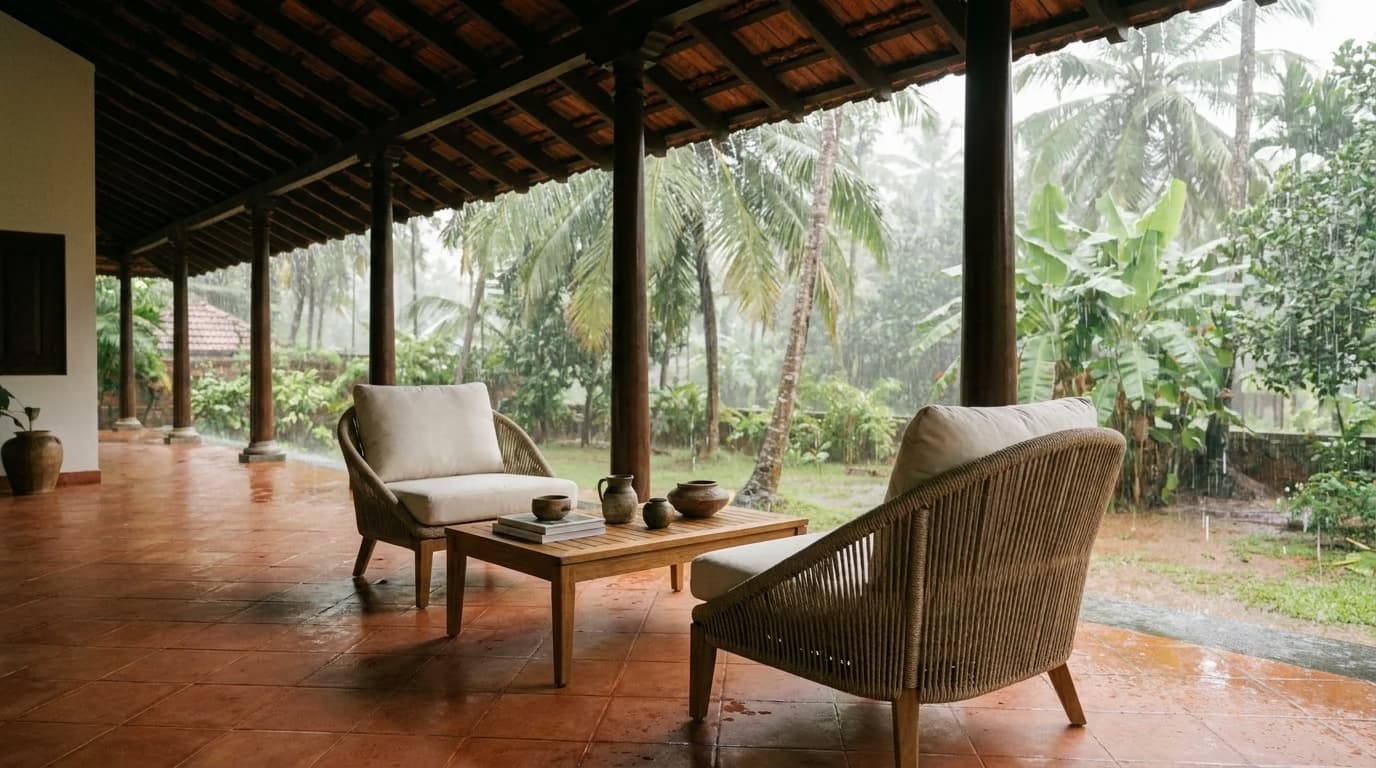
Traditional Kerala homes tend to have deep, covered verandahs, and that changes what you can get away with. Furniture under a covered verandah is shielded from direct rain and the harshest sun, so genuine teak does especially well there, ageing gracefully with minimal upkeep. You still get the humidity and the salt air, but you're not dealing with standing water on the seat or fabric baking under open sky.
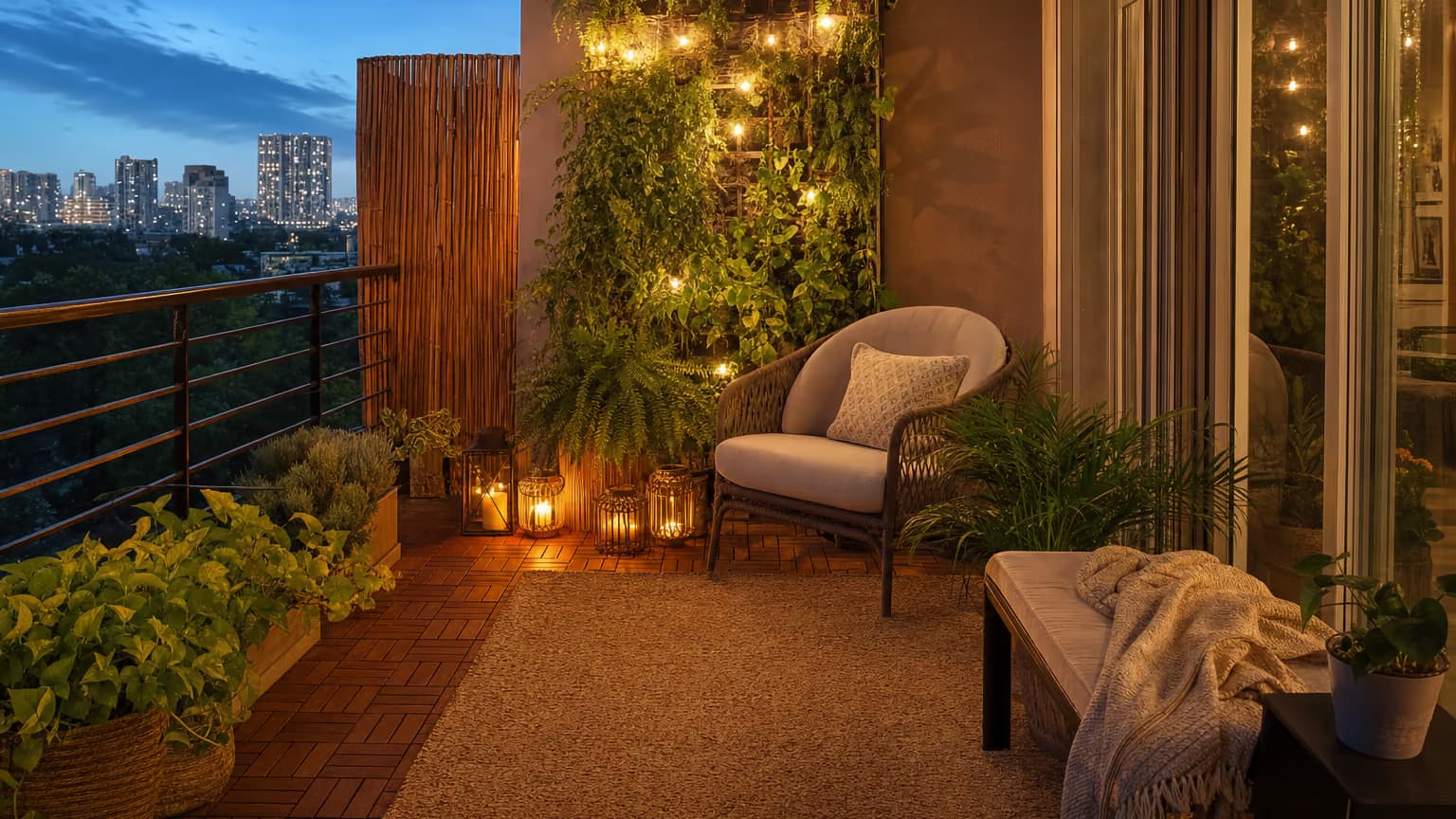
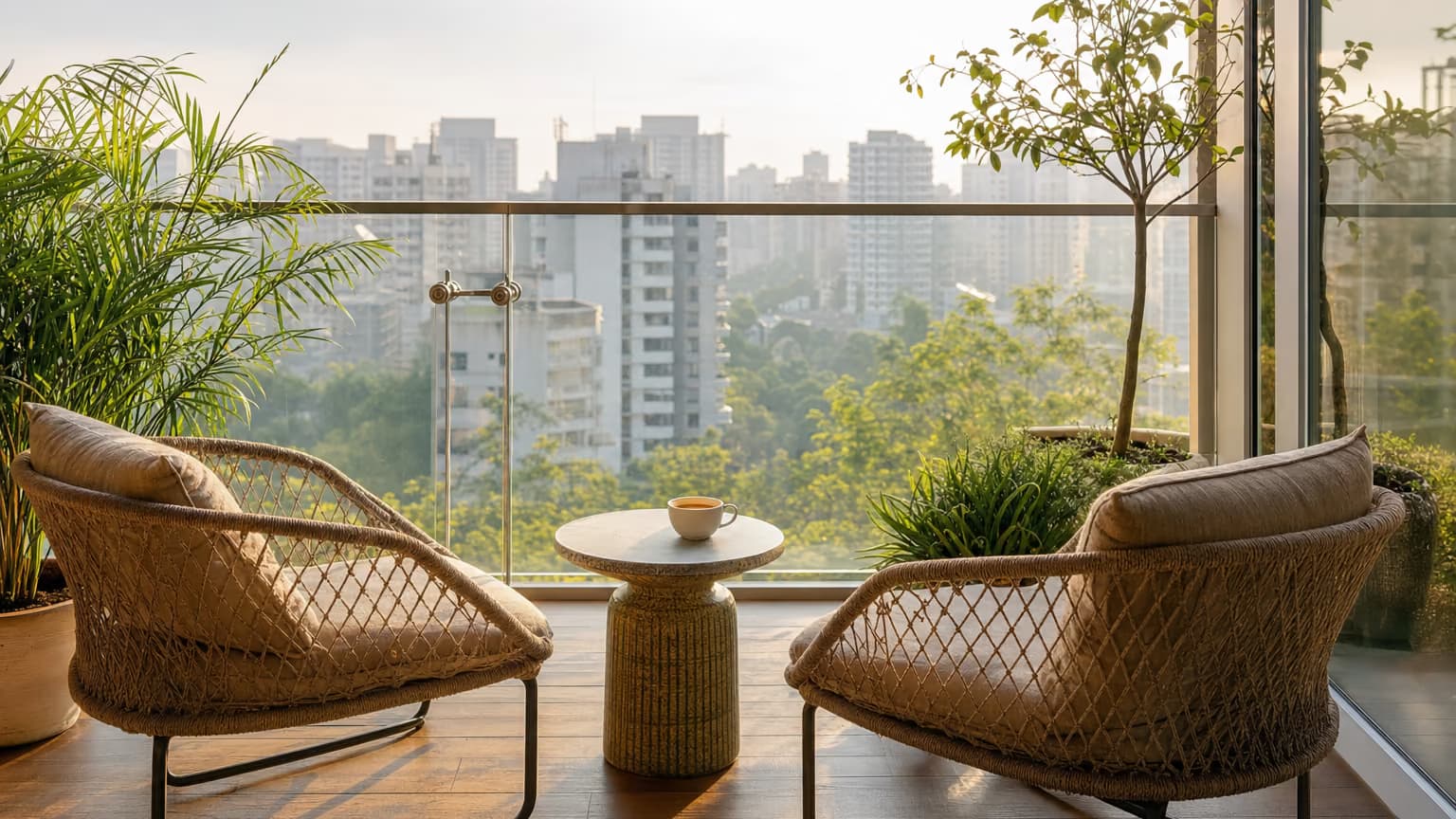
An open terrace or an exposed rooftop is a different situation. Furniture there takes direct rain from both monsoons and unfiltered sun in between, so powder-coated aluminium frames, synthetic weave and quick-dry cushions make more sense than wood or natural fibre. If your home has both a covered verandah and an open terrace, it's worth choosing different pieces for each rather than furnishing both the same way. A set that performs beautifully under cover can struggle badly once it's fully exposed, and the reverse is true too: heavy-duty exposed-terrace furniture can feel a bit clinical in a sheltered, traditional verandah.
A Kerala monsoon care routine
Good materials do most of the work, but a simple routine adds years to any outdoor set here. None of this needs to be complicated.
Dry cushions out fully whenever there's a break between showers, rather than leaving them out through a continuous wet spell. Check drainage holes on cushions and seating regularly, since a blocked hole is the difference between water passing through and water sitting inside the foam. If you're near the coast, rinse the salt film off metal frames every so often with plain water, since that film builds up quietly and speeds up corrosion even on good aluminium. And if you're covering furniture during the heaviest weeks, use breathable covers rather than sealed plastic sheets. A sealed cover over damp furniture traps moisture underneath and creates exactly the warm, still conditions mould needs, which often does more damage than leaving the piece uncovered.
For a broader look at what monsoon-proofing actually means across Indian cities, our guide to monsoon-proof outdoor furniture in India covers the material logic in more depth, and our teak, aluminium and wicker material guide goes deeper into how these materials compare against each other. If you want to see how a similarly humid, salt-heavy coastal city handles it, our Mumbai monsoon guide is a useful comparison, though Kerala's two-monsoon year and constant humidity make the margin for error even smaller.
Made to order for a Kochi verandah or terrace
World of Outdoors builds outdoor furniture to order in our Noida workshop and delivers across Indian metros, including Kochi and the rest of Kerala. Because every piece is made to order, we can size a set for your specific verandah or terrace, choose a frame and fabric suited to whether the spot is covered or fully exposed, and build for the two monsoons and salt air you actually live with.
Browse our outdoor furniture in Kochi options to see what fits your space, look through the wider collections for materials and styles, or get in touch and tell us about your verandah. We'll help you choose furniture built for Kerala's climate, not a showroom somewhere drier.
Frequently Asked Questions
Powder-coated aluminium frames paired with handwoven synthetic rope or wicker and quick-dry cushions handle Kerala's combination of salt air, humidity and two monsoons the best. Genuine Grade-A teak also performs very well, especially under a covered verandah. Avoid mild steel, untreated softwoods and natural cane left in the open.
Yes, genuine Grade-A teak handles Kerala's monsoons well because its natural oils and dense grain resist water from within the wood itself. It weathers to a silver-grey if left untreated, which many Kerala homeowners like, or you can oil it occasionally to keep the original tone. It does best when it gets some shelter, such as a covered verandah, rather than sitting fully exposed to both monsoons.
No, not in the way steel or iron does. Aluminium contains no iron, so it doesn't rust, and a good powder-coated finish adds further protection against salt air. This is why it's the safest frame material for homes close to the Kerala coast, including Kochi properties right along the backwaters or the sea.
Only if the furniture is already dry and the cover is breathable, not sealed plastic. A vented or mesh cover keeps rain and dust off furniture that's sitting unused. A sealed plastic sheet over damp furniture traps moisture underneath, which encourages mould faster than leaving the piece uncovered would.
Yes. Verandah dimensions in Kerala homes, especially older or traditional layouts, rarely match off-the-shelf furniture sizes. Made-to-order furniture lets you set the exact dimensions, choose the frame finish and pick fabrics suited to whether the space is covered or open, so the pieces actually fit the verandah instead of the other way around.