June 4, 2026
Monsoon-Proof Outdoor Furniture: What Actually Survives Indian Rains
What monsoon-proof outdoor furniture really means in India. Which materials survive, when covers help or hurt, plus a monsoon care checklist by city.
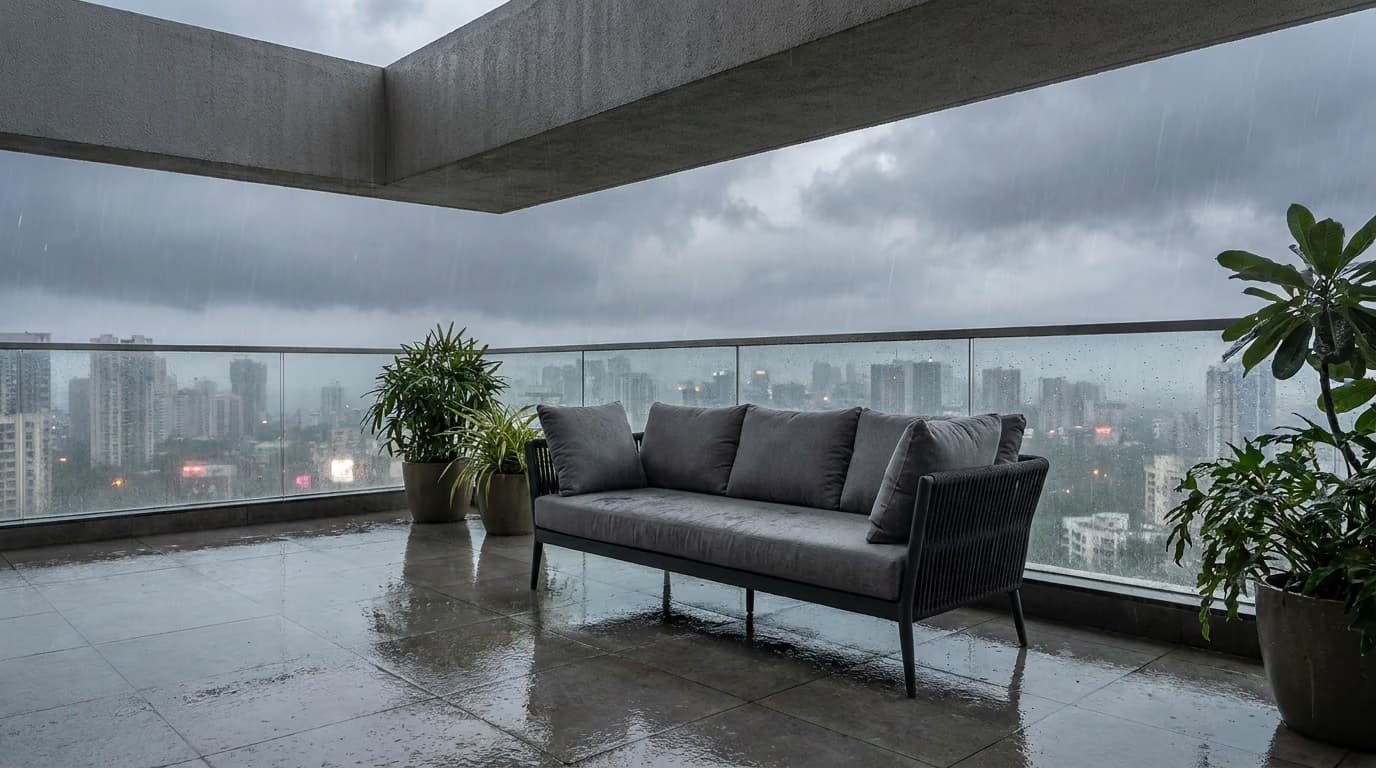
Every year it plays out the same way. In June the sky opens, and across Indian cities the outdoor furniture starts to lose. A balcony set in Powai that looked perfect in April is spotted with rust by August. A teak bench on a Gurgaon terrace goes grey and grainy. Cushions that were left out for one careless afternoon in Bangalore never really dry again, and by September they smell of mildew. People replace the pieces, or drag them indoors, or just stop using the outdoor space until winter. It becomes an annual ritual, and most of us treat it as unavoidable.
It is not unavoidable. Some furniture goes through five monsoons and still looks and feels good. The difference is rarely luck. It comes down to the material, the way the piece is built, and how it is cared for during the three or four wettest months. This post is about what actually survives an Indian monsoon and why, so you can stop buying the same set twice.
What the monsoon actually does to outdoor furniture
Rain is the obvious enemy, but rain alone is not what ruins things. The real damage comes from what the monsoon does over weeks and months.
The first problem is sustained humidity. For long stretches the air sits above 85 percent humidity and never really dries out. Wood swells and contracts. Fasteners stay damp. Anything porous holds water long after the last shower. The second problem follows from the first: fungal growth. Mould and mildew need moisture and still air, and a shaded balcony in July provides both. You see it as black or green speckling on cushions, on the underside of frames, in the weave of a chair.
Then there is rust and corrosion, which is where cheap metal furniture falls apart. Iron and untreated steel oxidise fast in wet, salty air. Once rust starts at a weld or a scratch, it spreads under the paint. There is also UV, which people forget about during monsoon. The sun does come out between showers, and that stop-start cycle of wet then hot then wet is harder on fabric and finishes than steady sun would be. Colours fade, plastics turn brittle, coatings crack. And finally there are waterlogged cushions. Foam that soaks up water stays wet inside for days, and that damp core is where the smell and the mildew live.
Waterproof outdoor furniture in India has to survive all five of these at once, not just shrug off a single downpour.
Material by material: what makes weather-resistant outdoor furniture
Material is the single biggest factor. Here is an honest verdict on the ones you will actually be choosing between.
Marine-grade aluminium
This is the safest choice for monsoon India. Aluminium does not rust, because it does not contain iron. It forms a thin oxide layer that protects the metal underneath instead of eating into it the way rust does with steel. Marine-grade aluminium, the kind used on boats, is built to sit in wet and salty air for years. It is light, it is strong, and with a powder-coated finish it handles both rain and UV without much fuss. If you live somewhere that floods every July, this is the frame to look for.
Teak
Teak has survived Indian weather for a very long time, and there is a reason. The wood contains natural oils and a tight, dense grain that resist water and insects from the inside. Left untreated, teak weathers to a soft silver-grey over a season or two, which many people like. If you prefer the original honey colour, you oil it once or twice a year. The one thing to check is that you are getting genuine, properly seasoned teak and not a cheaper lookalike wood sold under the same name, because the difference in monsoon shows up within a year.
Synthetic wicker and outdoor rope
Natural cane and bamboo do not belong outdoors in a monsoon city. They absorb water, sag, and rot. Synthetic wicker made from HDPE, and modern braided outdoor rope, are a different thing entirely. They are woven from UV-stabilised polymer that does not soak up water and does not fade quickly. Water runs off and through the weave instead of sitting in it. For all-weather outdoor furniture that still looks soft and woven rather than industrial, this is usually the material doing the work, wrapped over an aluminium frame.
Steel
Steel is where you have to be careful. Good stainless steel, grade 304 or ideally 316 for coastal areas, resists corrosion well. Cheap steel does not. A lot of budget outdoor furniture is mild steel with a coat of paint, and the moment that paint is scratched or chipped, water reaches the metal and rust begins. It then bleeds out from the inside. If a piece is very cheap and very heavy and the seller is vague about the grade of steel, assume it will rust. That is the trade you are making.
Fabrics and cushions
The frame can be perfect and the cushions can still ruin the set. Ordinary upholstery fabric and standard foam are a disaster in monsoon. What you want is solution-dyed acrylic for the fabric, where the colour goes all the way through the fibre so it does not fade or mildew easily, and a quick-dry foam core that lets water pass through and out instead of holding it. Quick-dry foam has an open structure, so a cushion left in a shower drains and dries in hours rather than staying wet for a week.
Outdoor furniture covers: when they protect and when they make it worse
Covers are the most misunderstood part of monsoon care, and searches for outdoor furniture covers keep climbing because people reach for them first. Used well, a cover is genuinely useful. Used badly, it does more damage than leaving the furniture bare.
A cover protects when it keeps rain and dust off a piece that is going to sit unused for a while, and when it is breathable and vented so air can still move underneath. The problem starts when a cover is airtight. If you throw a sealed plastic sheet over a damp set and cinch it tight, you have built a small greenhouse. Moisture from the furniture and the ground cannot escape, it condenses on the inside of the cover, and now your pieces sit in a warm wet pocket for days. That is worse than rain. Mildew loves it, and metal fasteners corrode faster in it than they would in the open.
So a few rules. Only cover furniture that is already dry. Use covers with mesh vents or breathable fabric, not bare tarpaulin. Do not seal them right to the ground. And if you are using the furniture through the season anyway, you often do not need a cover at all, because a well-made all-weather piece is designed to get rained on. Covers are for storage and for the pieces you are stepping away from, not a substitute for buying the right material.
Monsoon is not the same in every city
People ask for one answer, but the coast and the plains and the plateau get very different weather, and the right choice shifts with it.
On the coast, in Mumbai, Goa and Kochi, the issue is salt plus volume. The rain arrives in enormous quantities and the air carries salt off the sea, which accelerates corrosion on anything metal. Here marine-grade aluminium and grade 316 stainless earn their keep, and cheap steel does not last one season. If you are furnishing a place here it is worth reading our deeper Mumbai monsoon-proof outdoor furniture guide, and the city pages for Mumbai, Kochi and Goa.
North India, and Delhi NCR in particular, gets a different monsoon. It is shorter and more violent, with intense bursts rather than weeks of steady rain, and it comes loaded with dust. The dust matters. It settles into weave and into fabric, and when the rain hits it turns to a gritty film that grinds at finishes. Easy-clean synthetic wicker and washable acrylic fabric make more sense here than fussy natural materials. Our Delhi and Gurgaon page is built around that reality.
Bangalore is the gentlest of the three, more a long drizzle than a monsoon, spread across more of the year. The rain is lighter but the damp is persistent, so the real risk is slow, quiet mildew on anything left permanently in shade. Ventilation and quick-dry cushions matter more than heavy waterproofing.
The Deccan plateau, Hyderabad and Pune, sits between the extremes. The rain arrives in short heavy bursts from June to September, but the harder test is the rest of the year: months of intense sun that fade fabric and tire cheap materials before the rain even shows up. Furniture here needs UV-stable weaves and heat-tolerant frames as much as waterproofing. Our Hyderabad page and Pune page cover the plateau in detail.
A monsoon prep and care checklist
Whatever you own, a little care each season adds years. Run through this before and during the rains.
- Clean and fully dry every piece before the monsoon starts. You want to enter the season with no existing damp or dirt trapped in the material.
- Touch up any chips or scratches on metal frames. Bare metal is where rust gets in, so seal it before the wet arrives.
- Bring cushions indoors when you are not using them, or store them in a dry, ventilated box. Cushions are the first thing to go.
- Tilt chairs and tables slightly or lean them so water runs off instead of pooling on flat seats and joints.
- Keep furniture a little off the ground if you can. Standing water and constant contact with a wet floor speeds up damage from below.
- Only use covers on dry furniture, and use breathable ones. Check underneath every week or two for trapped moisture.
- Wipe salt residue off metal after storms if you are near the sea. It quietly corrodes even good alloys over time.
- Give everything a proper clean and dry once the monsoon ends, before you settle in for the drier months.
Our full outdoor furniture maintenance guide goes deeper on cleaning methods and products if you want them.
What to ask before you buy in a monsoon city
If you live somewhere with a serious monsoon, a few direct questions will save you from replacing a set next year. Ask what the frame is actually made of, and if the answer is steel, ask for the grade. Ask whether aluminium is powder-coated and whether it is marine grade. Ask what the cushion fabric is, and whether the foam is quick-dry. Ask whether the wicker or rope is UV-stabilised synthetic or natural material. And ask, plainly, how the piece has held up over a few Indian monsoons, because a maker who builds for this climate will have a real answer.
Price is a signal but not a guarantee. Plenty of expensive furniture is designed for dry European patios and struggles here, while a well-specified aluminium and acrylic set at a fair price will outlast it. The specification is what you are buying, not the sticker. Our full material guide lays out the trade-offs between teak, aluminium and wicker in more detail.
Built for your city, not a showroom
Most outdoor furniture in India is made once, to one spec, and sold everywhere from Kochi to Chandigarh as if the weather were the same. It is not. We make outdoor furniture to order, which means the frame, the finish and the fabric can be chosen for the monsoon you actually live with, whether that is salt air on the coast or dust and cloudbursts up north.
You can browse the collections to see what that looks like, read the city guides above for advice specific to where you are, or just reach out and tell us about your space. We will point you to what survives your rains, not a showroom's.
For coastal Kerala specifically, our Kerala coastal furniture guide goes deeper into salt air and the double monsoon.
Frequently Asked Questions
Marine-grade aluminium is the safest all-round choice because it does not rust and handles wet, salty air well. Genuine teak is excellent too, thanks to its natural oils. Pair either with synthetic wicker or rope and solution-dyed acrylic cushions. Avoid cheap steel and natural cane, which rot or rust within a season.
Only if the furniture is already dry and the cover is breathable or vented. A sealed, airtight cover traps moisture underneath and creates a warm, damp pocket where mildew and corrosion thrive, which is worse than rain. If you use the furniture through the season, well-made all-weather pieces often need no cover at all.
Clean and dry everything before the rains, touch up scratches on metal frames, and bring cushions indoors when they are not in use. Tilt pieces so water runs off, keep them slightly off the ground, and use only breathable covers on dry furniture. A quick clean and dry after each storm goes a long way.
Yes, genuine seasoned teak handles monsoon very well because its natural oils and dense grain resist water and insects. Left untreated it weathers to a silver-grey; oil it once or twice a year to keep the honey colour. The key is buying real teak, since cheaper lookalike woods fail within a year.
It is almost certainly mild or low-grade steel under a coat of paint. Once the paint chips or scratches, water reaches the metal and rust spreads from inside. Switch to marine-grade aluminium, which cannot rust, or grade 304 or 316 stainless steel, especially near the coast where salt speeds up corrosion.