July 14, 2026
Balcony and Terrace Furniture Ideas That Survive Indian Weather
Balcony and terrace furniture ideas by space size, matched to Indian rain, sun and dust, from compact balconies to full rooftop terraces.
Most Indian balconies sit empty, or worse, they become storage for things nobody wants inside the house. Part of the reason is furniture ideas that come from foreign home blogs, built for climates that never see a monsoon or forty-degree summer sun. A rattan set photographed on a dry deck in another country does not behave the same way on a Mumbai balcony in July or a Delhi terrace in June.
The fix is not more furniture. It is furniture chosen for the specific space you have and the weather it actually faces. A compact apartment balcony needs different pieces than a large terrace, and an exposed rooftop needs different materials than a covered one. Here is how to think about it by space type, with a weather note for each idea so you are not guessing later. If you want to go beyond furniture to floors, plants and lighting, our balcony makeover and decoration guide works through it layer by layer.
Compact apartment balcony (under 6 ft deep)
Small balconies fail when people try to fit living room furniture into a space that is a third of the size. The better approach is to pick one or two multi-use pieces instead of a full set.
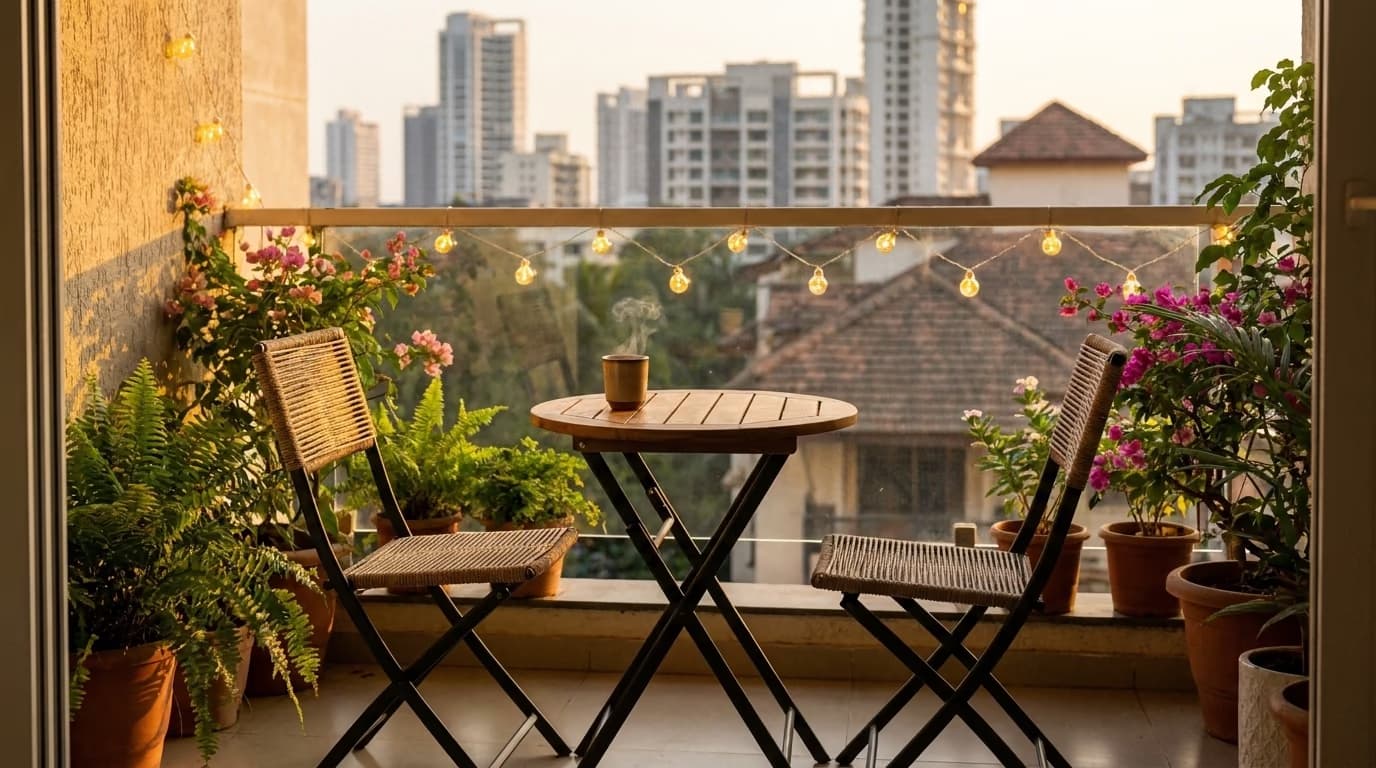
A folding bistro set
Two chairs and a small round table that fold flat against the wall when not in use free up the floor for the rest of the day. This is the simplest way to get balcony seating into a tight footprint without the space feeling cramped all the time.
Weather note: look for powder-coated aluminium frames, not painted mild steel. Aluminium does not rust, so it handles rain spray without corroding at the joints, which is where cheap folding furniture usually fails first.
A wall-mounted or narrow console shelf with a single stool
If there is barely room to stand, a slim shelf for a coffee cup and one stool tucked under it gives you a usable corner without eating the walking space. For more layout ideas built specifically around tight dimensions, our small balcony outdoor furniture guide goes deeper into what fits where.
Weather note: keep any wood component teak or a sealed hardwood, since a narrow balcony often gets splashback from rain even under a slight overhang.
A single hanging or swing chair
For a balcony that is deep enough for one seat but not two chairs side by side, a compact hanging chair uses vertical space instead of floor space. It reads as a design feature rather than clutter.
Weather note: choose synthetic wicker or braided rope over natural cane. Natural cane absorbs moisture and sags within a season on an exposed balcony, while synthetic weaves shed water and hold their shape.
Foldable planter-side seating
If most of the balcony is already given to plants, a slim folding stool that tucks beside the planters gives you a place to sit while watering or having a coffee, without demanding permanent floor space.
Weather note: since these balconies are often close to standard dimensions, it helps to check our post on standard balcony sizes in India before buying anything, so you are not guessing at clearance.
Standard balcony (typical 3BHK apartment size)
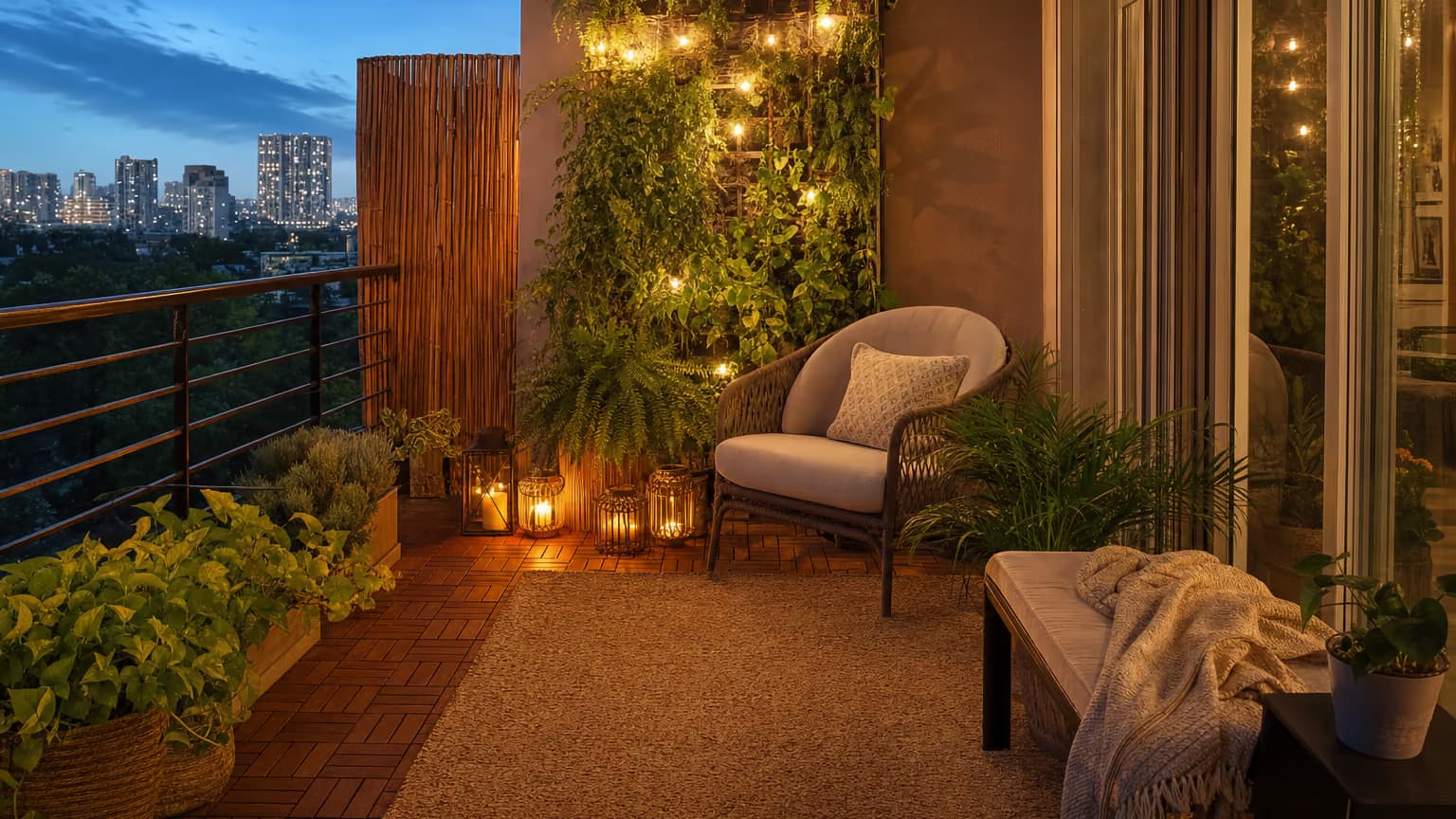
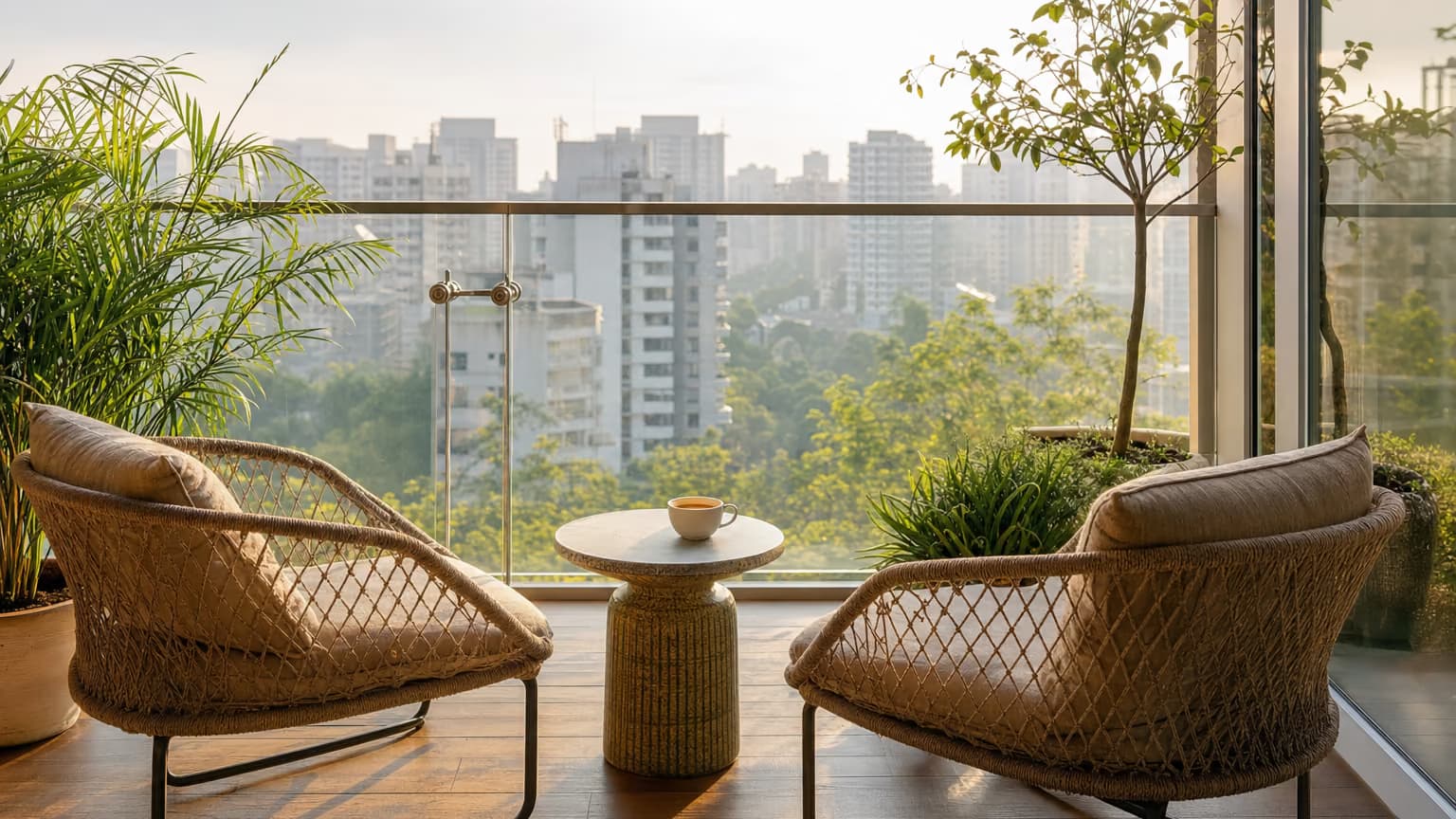
A standard balcony usually has enough room for real terrace seating, not just a stool. This is where most people either get it right with a proper small set, or waste the space with something too large or too flimsy.
A two-seater sofa with a coffee table
A compact two-seater with a low table in front turns the balcony into an actual sitting-out spot rather than a walkway. Quick-dry foam cushions matter here more than the frame, since this is the piece people actually sink into.
Weather note: quick-dry foam has an open cell structure that lets water pass through and drain, so a cushion caught in a sudden shower dries in hours instead of staying damp for days.
A four-chair set around a small dining table
If breakfast or evening tea happens outside, a small four-seater table works better than a lounge setup. It also doubles as workspace during the day.
Weather note: UV-resistant performance fabric on the seat pads keeps colour from fading under direct afternoon sun, which is the main complaint with standard balcony sets after a year.
A daybed or bench along one wall
A long bench or narrow daybed against the balcony wall gives flexible seating for more than two people without taking up the centre of the space.
Weather note: teak holds up well here because of the natural oils in the wood, which resist water and insects even with regular exposure. It also weathers to a soft grey over time if left untreated, which many people prefer to a glossy finish.
Large terrace
A large terrace can carry a genuine outdoor living room, but the temptation is to overfill it. The better move is to zone it: a seating area, a dining area, and open space in between.
A modular sectional sofa
Modular pieces let you configure an L-shape, a straight run, or two separate clusters depending on the occasion, which suits terraces used for both quiet evenings and larger gatherings.
Weather note: ask for a sealed, UV-stabilised frame and covers that can be removed and washed. Fabric that cannot be taken off for a wash tends to hold dust from open-air exposure.
An outdoor dining set for six to eight
Terrace furniture ideas almost always include a proper dining table once the space allows it, since terraces are where families actually eat outdoors on cooler evenings.
Weather note: a solid teak or aluminium-topped table handles being left out far better than glass, which can crack under sudden temperature swings between hot afternoons and cool nights.
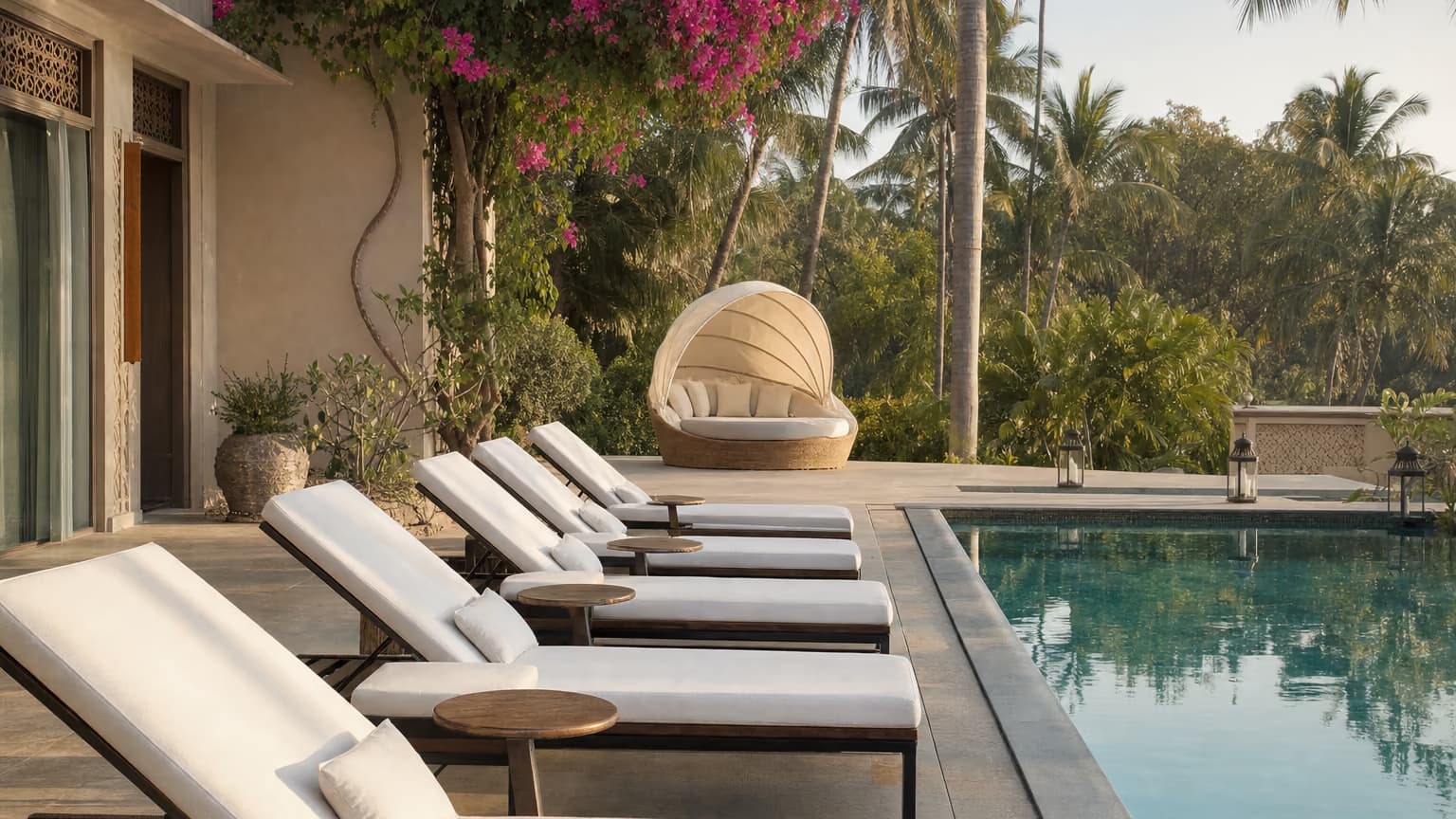
A daybed or lounger cluster
A pair of loungers or a wide daybed in one corner gives the terrace a resting spot that is separate from the main seating and dining zones.
Weather note: handwoven rope loungers over an aluminium frame combine comfort with a structure that will not corrode, which matters on a terrace that gets more open exposure than a balcony.
Planters and screening as furniture, not decoration
On a large terrace, tall planters or a slatted screen can double as space dividers between the dining and lounge zones, making the terrace feel like separate rooms instead of one open slab.
Weather note: if any of the terrace is uncovered, our monsoon-proof outdoor furniture guide covers which materials actually survive direct rain through a full season.
Rooftop terrace
Rooftop terrace furniture deals with the harshest version of Indian weather: full sun with no shade for most of the day, wind, and often no cover at all during rain. Rooftop terrace furniture needs to be chosen with that in mind from the start.
A shaded lounge setup with a pergola or large umbrella
Since rooftops rarely have natural shade, the first decision is usually a pergola, shade sail, or a heavy-base umbrella before the furniture underneath it. For planning the whole terrace, from zones and shade to flooring and lighting, see our terrace design ideas guide.
Weather note: a solution-dyed acrylic canopy holds its colour under constant UV exposure far longer than standard printed fabric, since the dye runs through the fibre rather than sitting on the surface.
Low-maintenance aluminium seating
For rooftop terrace furniture, aluminium frames are usually the safer default over steel, simply because rooftops get more wind-driven rain and more direct sun than a sheltered balcony.
Weather note: powder-coated aluminium does not rust and does not need repainting the way steel does once a coating chips, which matters when the piece cannot be moved indoors easily.
A fire pit or heater seating circle
Rooftops often get used more in the evening than midday, so a small circle of chairs around a fire feature or heater makes sense where the daytime sun is too strong to sit out in.
Weather note: keep any fabric seating pads under a UV-resistant performance fabric, since rooftop sun exposure is more direct and constant than a balcony that gets partial shade from the building itself.
Wind-resistant, heavier-base pieces
Rooftops catch more wind than lower balconies, so lightweight chairs and small side tables tend to shift or tip. Heavier, wider-base pieces or furniture with a low centre of gravity handle this better.
Weather note: made-to-order sizing helps here, since a rooftop often has odd dimensions or parapet heights that standard retail furniture is not built around.
Choosing materials for exposed vs covered spaces
The single biggest factor in how long balcony or terrace furniture lasts is whether it sits in a covered spot or takes direct rain and sun. The two situations call for different choices.
For covered balconies and terraces, where an overhang or the floor above blocks most of the rain, you have more flexibility. Teak works well here since it is mostly protected from standing water, and natural weave or lighter fabrics can be used without worrying constantly about mildew. The main enemy in a covered space is still humidity and dust rather than direct soaking.
For exposed spaces, whether that is a rooftop with no cover or a terrace edge that catches wind-driven rain, the priorities shift. Powder-coated aluminium becomes the safer frame choice since it does not rust. Synthetic wicker or braided rope replaces natural cane, since natural fibres absorb water and sag. Quick-dry foam replaces standard cushion foam so a sudden shower does not leave you with a damp seat for a week. And UV-resistant performance fabric matters more here than anywhere else, since direct sun for most of the day fades ordinary fabric within a season.
If you are unsure which of your outdoor materials best suit an exposed versus covered spot, our material guide to teak, aluminium and wicker breaks down the trade-offs piece by piece.
If you would rather see these ideas made real for your own balcony or terrace, browse our collections for made-to-order pieces in teak, aluminium and handwoven rope, or book a design consultation at our Noida studio, by appointment, to work through the layout in person.
Frequently Asked Questions
Stick to one or two pieces that do double duty: a folding bistro set, a single hanging chair, or a narrow bench. Avoid anything that needs to be walked around, since a small balcony loses most of its usefulness the moment furniture blocks the path to the railing.
Yes, if it is built for it. Powder-coated aluminium, synthetic wicker, teak, and quick-dry foam cushions are all designed to handle rain without rusting, rotting, or staying waterlogged. Cheap steel and standard foam cushions are the ones that do not survive being left out.
Aluminium frames and solution-dyed acrylic or UV-resistant performance fabric hold up best. The fading and cracking most people associate with rooftop furniture usually comes from ordinary fabric and unprotected finishes, not from the sun itself being unmanageable.
Go vertical and foldable rather than wide. Wall-mounted shelves, folding chairs that store flat, and a single stool or hanging seat use less floor area than any two-chair set, and they let you reclaim the space when you need to.
It depends on exposure. Teak suits a covered or partly sheltered terrace where it is not sitting in standing water. Aluminium is the more forgiving choice for an exposed terrace or rooftop, since it does not rust and needs less upkeep. Many terraces end up using both: aluminium frames for exposed lounge seating, teak for a covered dining set.