July 28, 2026
Made to Order: How Custom Outdoor Furniture Is Built in Our Noida Workshop
How made-to-order outdoor furniture is actually built, from first measurement to final delivery, inside our own workshop in Noida.
Most outdoor furniture bought in India comes off a shelf. It arrives in a fixed size, in whatever fabric the brand chose that season, made somewhere far from the home it ends up in. You choose the closest match and adjust your terrace to fit the furniture, rather than the other way round.
Made-to-order flips that around. Instead of picking from what already exists, you describe the space and the piece is built for it. That sounds simple, but a lot happens between the first enquiry and a finished sofa or dining set landing on your balcony. This post walks through what actually happens at each stage, honestly, including the part where it takes longer than buying something ready-made.
What made-to-order actually means
Made-to-order outdoor furniture means the piece does not exist until you order it. There is no warehouse of finished sofas waiting to be shipped. Instead, dimensions, fabric, weave and finish are chosen for your specific space, and production starts only after that brief is confirmed.
In practice this covers three things. First, custom dimensions: a sofa built to fit an odd-shaped balcony corner or a dining table sized for a specific number of covers, rather than a standard width that may or may not work. Second, choice of materials and finish: the frame, the weave, the fabric and the foam are all decisions rather than fixed variables. Third, the piece is built when ordered, not pulled from existing stock.
The honest trade-off is time. A made-to-order piece takes longer to reach you than something already sitting in a store. You are trading a shorter wait for a piece that actually fits your space and your taste, rather than the other way round. If you need furniture the same week, made-to-order is not the right fit. If you are planning ahead for a terrace, a new home or a hospitality project, it usually is.
It also means you are ordering a specific object rather than choosing from a range of near-misses. Anyone who has furnished a balcony knows the usual compromise: the sofa that is almost the right depth, the dining table that seats six when the space really wants five, the fabric that is close to what you pictured but not quite. Made-to-order removes that compromise at the cost of some patience, and for a piece that is going to sit on your terrace for years, that trade tends to be worth making.
The process, step by step
Here is what actually happens between an enquiry and a finished piece on your terrace.
1. The brief and measurements
Everything starts with understanding the space. That means the dimensions, obviously, but also how much sun the area gets through the day, which direction it faces, whether it is a covered balcony or an open terrace, and how the space is actually going to be used: everyday family seating, occasional entertaining, or a hospitality area that needs to handle heavier daily use.
This can happen in person, at our by-appointment design studio in Noida, or remotely if you are elsewhere in the country. Either way, the goal at this stage is the same: get accurate measurements and a real sense of how the piece will be lived with, before any design decision gets made.
2. Design and material selection
With the brief in hand, the next step is choosing what the piece is actually made from. This is where frame material, weave pattern, fabric and foam get matched to the specific space and to the climate of the city it is going to. A piece heading to a coastal home in Kochi is specified differently from one going to a dry, dusty Delhi terrace, even if the design looks similar on paper.
This is also where World of Outdoors works as an outdoor furniture manufacturer rather than a reseller choosing from someone else's catalogue. Because the frame, weave and fabric are all made in-house, combinations that a standard catalogue would not offer are possible: a specific weave over a specific frame, in a fabric that suits a specific room.
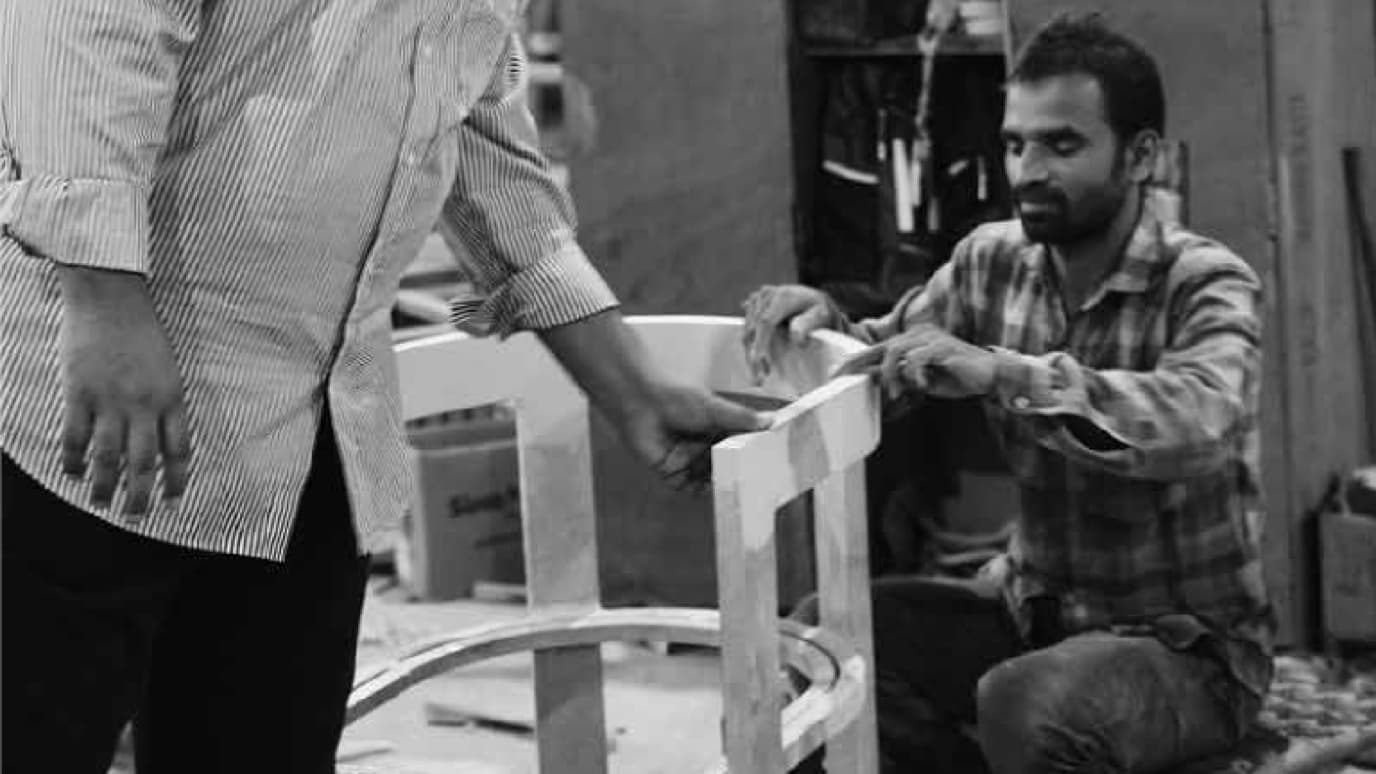
3. The frame
The frame is the part nobody notices and the part that decides how long the piece lasts. We build frames primarily in powder-coated aluminium or Grade-A teak, chosen based on the design and the setting. Powder-coated aluminium is light, does not rust, and holds up well through repeated exposure to sun and rain. Grade-A teak brings warmth and weight, and ages well outdoors when the wood itself is genuinely good quality to begin with.
This is the stage that is easiest to shortcut and hardest to fix later. A frame built from a poor grade of aluminium or unseasoned wood will show its weaknesses within a year or two, usually after the cushions and fabric have already been replaced once. Getting the frame right the first time is the single most important decision in the whole build.
4. The weave
For woven pieces, the rope or wicker goes on next, over the finished frame. This is handwoven, by hand, one strand at a time, rather than machine-pressed onto a mould. A handwoven finish holds its shape and tension more consistently over years of outdoor use, and it allows the weave pattern and density to be adjusted for the specific piece rather than fixed by a factory template.
This step is also where a lot of the character of a piece comes from. The same frame can look completely different depending on whether the weave is tight and formal or loose and relaxed, and made-to-order means that choice belongs to you rather than to whatever the catalogue photo happened to show.
5. Cushions and fabric
Frame and weave decide how the piece performs structurally. Cushions and fabric decide how it feels to actually sit on, and how much maintenance it demands afterward. We use quick-dry foam with an open cell structure that lets water pass through and drain out, instead of soaking it up and staying damp for days after rain, which is what happens with ordinary foam left outdoors.
The fabric on top is chosen from UV-resistant performance textiles built to hold their colour under direct sun rather than fading within a season. Covers are removable, which matters more than it sounds: it means cushions can be washed or replaced later without replacing the whole piece.
6. Finishing, quality check, delivery and installation
Once the frame, weave and upholstery come together, each piece goes through a final check before it leaves the workshop: joints, finish, stitching and fit are all inspected against the original brief. Furniture is then packed and delivered, and for larger pieces, assembled and installed on site so it arrives ready to use rather than in parts with an instruction sheet.
Why buy from the maker rather than a reseller
Buying directly from whoever actually builds the furniture changes a few things in practical ways. You are talking to the people who make the piece, not a third party relaying questions back and forth, so specific requests about size, fabric or finish get answered directly rather than getting lost in translation.
Custom sizing is also genuinely possible when the maker controls production, rather than being limited to whatever a supplier already stocks. And down the line, repairs and refreshes are easier, because the people you are talking to are the same people who know exactly how the piece was built: what frame, what weave, what fabric. That matters more than people expect once a cushion needs replacing or a weave needs a repair a few years in.
If you want a broader sense of how made-to-order compares with the ready-made options most people default to first, our made-to-order alternatives guide lays that out in more detail.
There is also a longer-term reason this matters. Outdoor furniture lives outside for years, through sun, rain and daily use, and it eventually needs attention: a cushion replaced, a weave tightened, a finish touched up. When the same workshop that built the piece is still around and still making that exact frame and weave, that kind of follow-up work is straightforward. When a piece was sourced from wherever was cheapest that season, tracking down a matching repair later on is a lot harder.
What to ask any made-to-order maker before ordering
Whether you order from us or from anyone else, a few direct questions will tell you a lot about what you are actually buying:
What is the lead time, in writing? A genuine made-to-order maker should be able to give you a timeline for your specific piece rather than a vague answer.
What is the frame actually made of? Ask for the specific material and grade, not just a general description like "metal" or "wood".
Is the foam quick-dry? Ordinary foam left outdoors stays damp for days after rain and starts to smell. Quick-dry foam is worth confirming before you order.
What is the fabric, specifically? UV-resistant, outdoor-rated fabric behaves very differently from standard upholstery fabric once it is left in the sun for a season.
What happens if something arrives damaged? Get a clear answer on this before you pay, not after something goes wrong.
Do they install it? Especially for larger pieces, knowing whether delivery includes assembly on site changes how much work lands on you at the end.
If any of this sounds like what your terrace or project needs, the best next step is a conversation rather than a guess. You can browse our collections to see the range of what we build, look through projects we have completed for homes and hospitality spaces, or read our material guide for a deeper look at teak, aluminium and wicker. For ideas on how a made-to-order piece fits into a larger outdoor space, our guide on designing premium terraces, balconies and gardens is worth a read too. Or simply get in touch and tell us about your space. World of Outdoors designs and manufactures its furniture in its own workshop in Noida, and that conversation is where every piece starts.
Frequently Asked Questions
Typically a few weeks once the design, materials and dimensions are confirmed. The exact time depends on the piece: a single chair moves faster than a large modular sofa or a multi-piece dining set. Any maker worth ordering from should be able to give you a timeline specific to your piece before you confirm.
No. Single pieces are welcome alongside larger orders. We work with individual homes as often as we work with trade and hospitality projects, and the process is the same either way.
Yes. That is essentially what made-to-order means. Dimensions are set to fit your space, and fabric, frame finish and weave are chosen from the options available for that piece.
Often it is comparable at an equal level of quality. With made-to-order, you are paying for materials and the build itself rather than for maintaining shelf inventory. A ready-made piece built to a lower material spec can look similar in a photo while costing less, but the comparison only really holds once you match quality against quality.
Yes, we deliver across Indian metros, not only within Delhi NCR.